

California’s Delicate Energy Situation
How long the war might last is not clear, but its effects are being felt in global energy markets. Oil moves easily across borders, which means supply disruptions quickly lead to higher gasoline prices.
However, it is harder to ship natural gas around the world. That limited mobility has helped shield US natural gas prices. The US is a net exporter of natural gas.
California, however, is in a more delicate situation. It’s what you might call an energy island. It is not connected to major oil pipelines, California oil production and shipments from Alaska are down sharply over the last 30 years, and imports account for about 60% of its needs today—Fig 1.
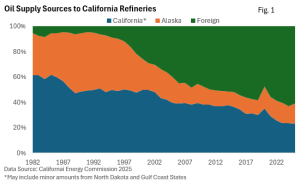
In addition, about 30% of its imports are derived from the Middle East (Iraq: 18%, Saudi Arabia: 8%, and the United Arab Emirates: 3%), according to the California Energy Commission.
In other words, about 18% of all California’s oil is imported from the unstable Persian Gulf.
In total, the US imports about 500,000 barrels per day from the Persian Gulf, according to the International Energy Agency. Almost half lands in California.
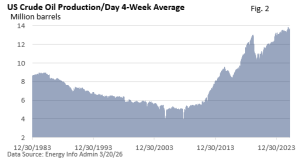
In contrast, the US produces almost 14 million barrels of oil per day, according to the US Energy Information Administration—Figure 2. As a whole, the country is not very dependent on Middle Eastern crude.
In fact, oil imported from OPEC has declined by about 75% since 2006. Imports mostly originate from the Western Hemisphere.
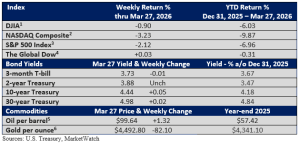
Although Strategic Petroleum Reserve releases could help mitigate near-term strains, a shift by Asian refineries toward domestic markets (CA imports some of its gasoline) and reduced Middle East oil imports could expose California to greater price volatility and supply risks.
Bottom line
• Yes, gasoline lines and shortages are plausible in California.
• The risk is higher than in most US states due to imports and isolation.
• Shortages in the state—if they occur—would most likely be regional and temporary.
• Any refinery outages in California could exacerbate the situation.
• Price spikes are the most likely outward sign; lines follow only if supply interruptions persist.