

It’s Hard to Say Good-bye: What Persistently Low Layoffs Say About the Economy
Much has been made of the sluggish hiring environment, but less attention has been paid to an important counterpoint: the persistently low level of layoffs.
Figure 1 highlights the number of individuals who go online or head to their respective state’s unemployment office and file for benefits following a layoff.
At 200,000 in the week ended January 17, claims are near a historic low.
Not surprisingly, layoffs peak in a recession, and the severity of the recession plays a big role in the level.
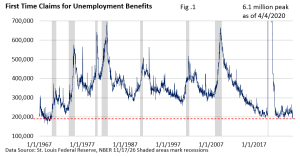
It’s curious that the low reading persists despite high-profile layoff announcements. Perhaps severance packages may delay filings, while others who lose jobs may find refuge in other departments at their company.
Let’s drill down on the last three years—Figure 2.
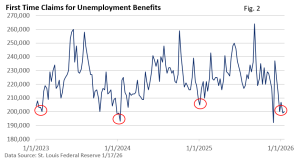
Low layoffs are an important economic gauge as it’s a reliable indicator that companies are reluctant to lose employees due to the demand for the goods and services they offer.
That said, filings tend to decline in January—Figure 2—which may simply reflect seasonal quirks in the data rather than a recent, positive shift in labor market dynamics.
If this seasonal pattern persists, filings may edge modestly higher in the weeks ahead. Still, the move back toward the lower end of the annual range is encouraging and, on its own, does not signal underlying economic weakness.
In summary, layoffs never disappear entirely, but workers filing for benefits remains low.
That is a constructive signal for both the labor market and the broader economy. In turn, sustained economic growth provides underlying support for corporate profits.