

Oil Has Given Back Gains, but Gasoline—Not So Much
Just before the start of the war, WTI crude oil traded at about $67 per barrel, according to MarketWatch. By last week, the price of oil had fallen to within about $1 of its pre-war price.
However, the same can’t be said for the average U.S. price of regular gasoline, which remains over 80 cents per gallon above the late February price, according to GasBuddy. What gives?
First, seasonality affects gasoline prices. Figure 1 illustrates the average change in gas prices over the last quarter-century. On average, prices rise until Memorial Day, plateau over the summer, and drop after Labor Day.
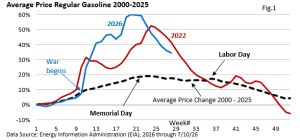
To begin with, seasonality is a factor. But seasonality isn’t entirely to blame.
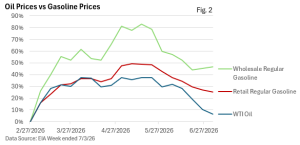
Figure 2 highlights the changes in wholesale gasoline prices, retail gasoline, and WTI crude oil since the beginning of the war—see Figure 2.
Oil is nearly back to the pre-war level—not so for gasoline.
Note that wholesale gasoline remains elevated. If wholesale gasoline had decreased in tandem with oil, we could hold retailers and their fatter profit margins accountable. But that doesn’t appear to be the case. Instead, the spread between wholesale gasoline and oil is quite elevated.
So, why have retail and wholesale remained high? Well, there are various factors coming into play.
According to the EIA, refineries have ramped up production of jet fuel and propane. Currently, both jet fuel and propane stockpiles in the U.S. are above the 5-year range for this time of year, even as U.S. exports of these products have surged.
But the increase in jet fuel and propane production has come at the expense of gasoline. According to Bloomberg, gasoline inventories are at a 14-year low for early July.
So, tighter domestic supplies and seasonality are contributing to the slow decline in gasoline prices.
Finally, there’s another dynamic that industry observers often refer to as “rockets and feathers.”
As the name implies, gasoline prices tend to shoot up like a rocket when crude oil prices rise but drift lower like a feather when oil prices decline. That’s not much comfort when filling up at the pump, but it’s a recognized phenomenon in the industry.
If oil prices stay within the current range and traffic from the Middle East resumes (a significant if), consumers may finally experience more substantial relief in the fall.
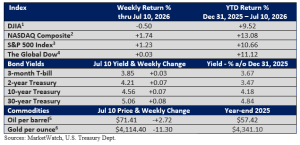
For investors, elevated gasoline prices aren’t being reflected in stock prices, with the S&P 500 Index near a record and the Dow having posted a new high last Monday.